[ Conferences ]
Replanning at the Click of a Button: How Data Drives the Supply Chain at Saft Batteries
Reed more
This project involved a SAP upgrade to S/4 HANA and Fiori, in the chemical industry, with the deployment of IBP across seven industrial sites in Europe and the headquarters in Lyon. The project kicked off in late 2024, with the ERP now live since May 2026.
I designed a simple homepage structure, built around regular publication of news, testimonials and key information, making everything easy to find :
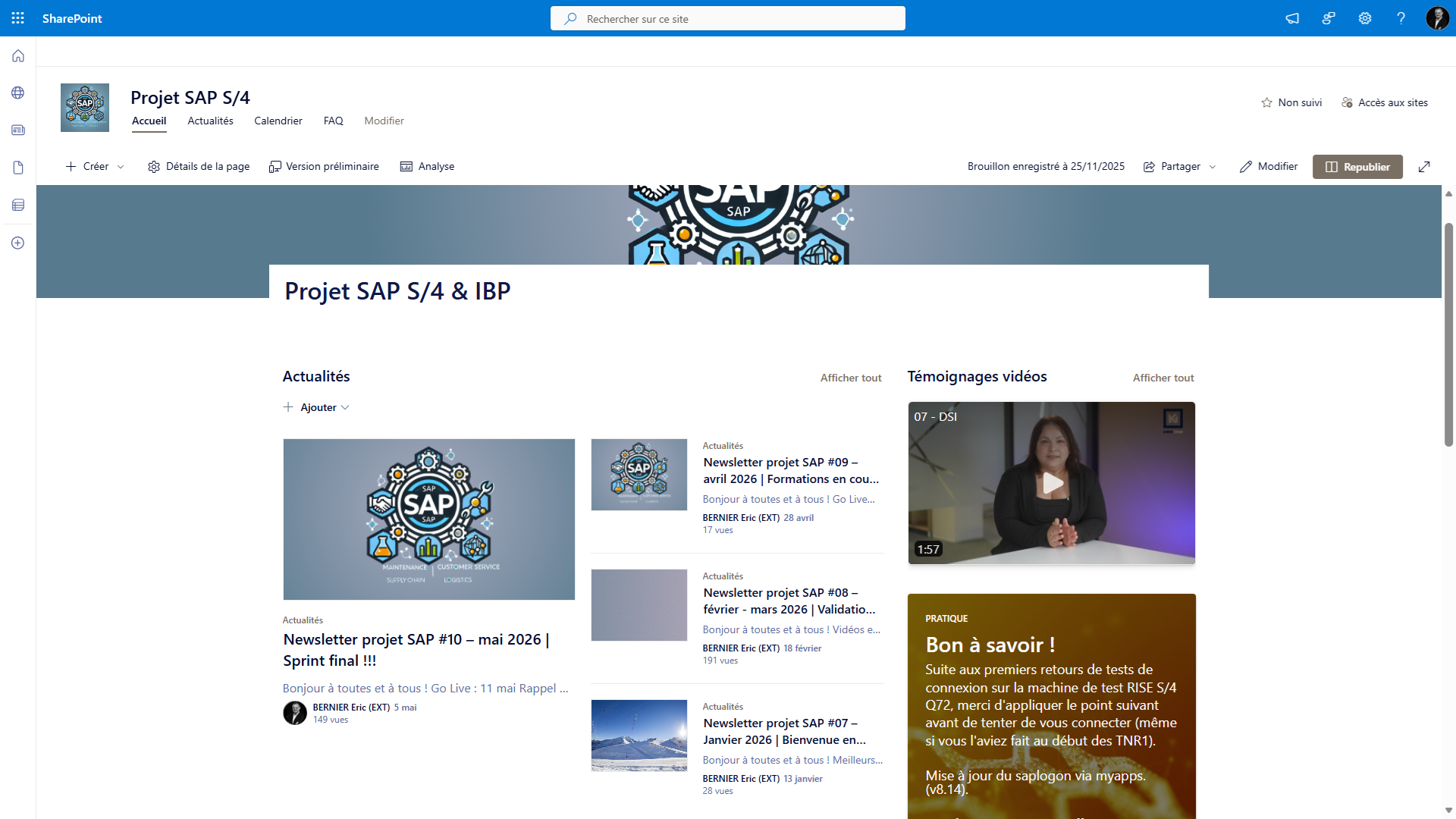
This newsletter was initially heavily powered by ChatGPT, which helped get things off the ground quickly from a blank page. The avalanche of very AI-looking emojis and bold sentences quickly became unbearable.
The content is now produced the old-fashioned way, prioritizing a sincere tone and useful information, with a summary at the bottom of the page.
We cover current news and upcoming steps, making the project methodology tangible.
Each newsletter is designed as a SharePoint news article.
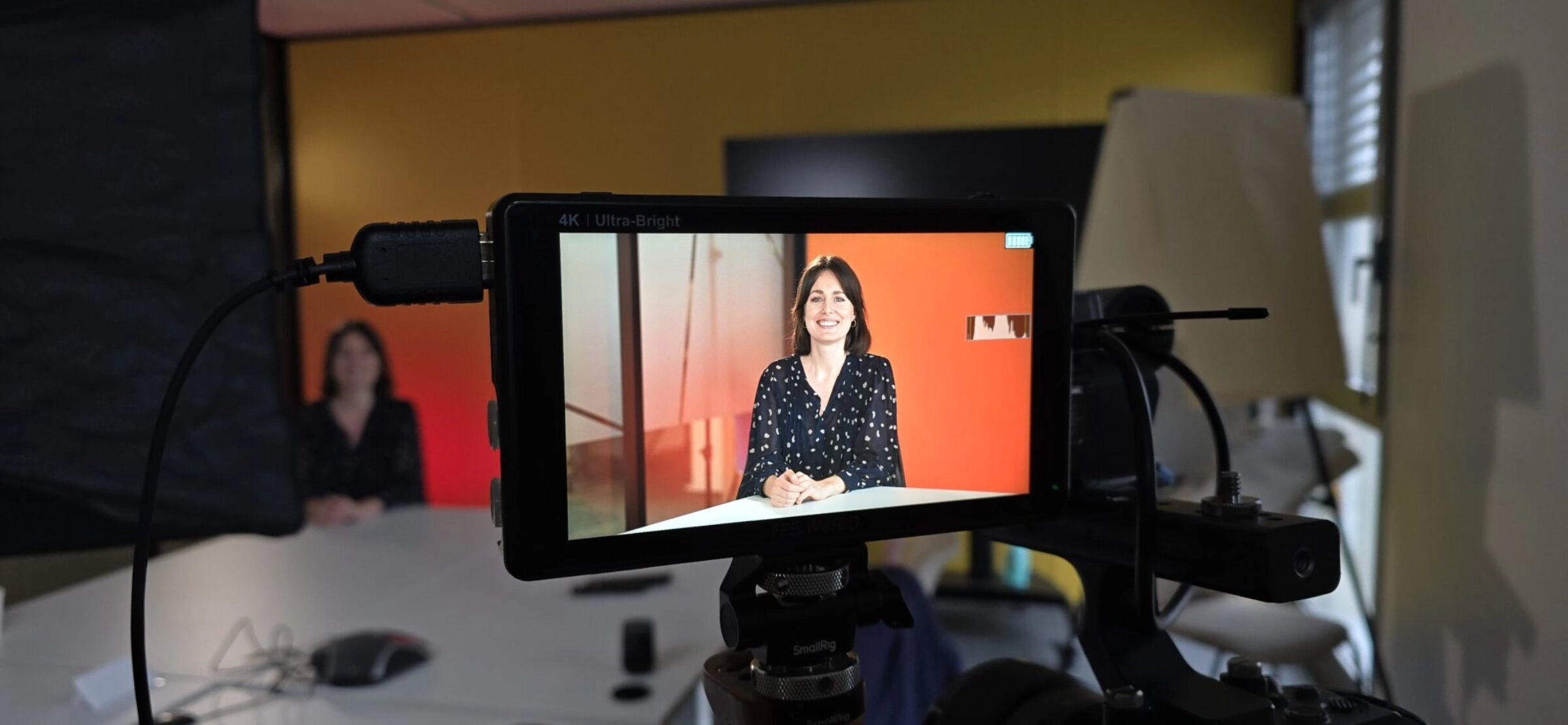
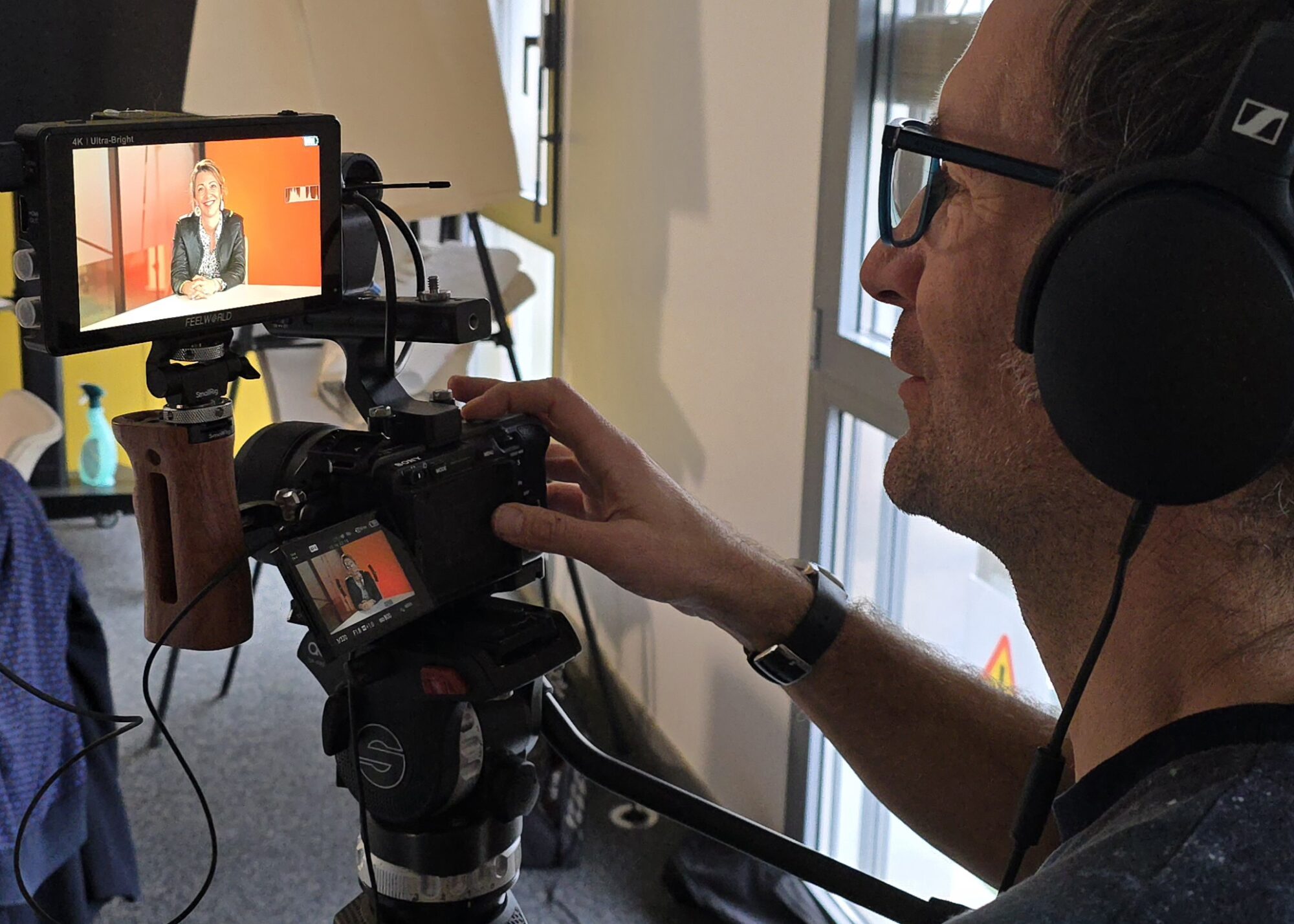
Here, the Executive Committee expresses its commitment to the project on camera : the support this provides for change management is simply exceptional. Each director had their own video, and we also produced a combined edit.
The most impacted key-users also shared testimonials about the changes underway, reassuring content that resonates with everyone in the company.
We produced 8 videos, thanks to the exceptional skills and great company of Julien GILLE de la Londe from Storystellar. I invite you to visit their website Video Production Agency in Paris (+1035 videos) — there are some real gems showcasing their creativity. I have a soft spot for the SNCF ad 😉”
The 8 videos we produced :
Traditionally in a project, each business area has a business champion who expresses the company’s needs within the project, supported by key-users on each site.
We created and coordinated a third population of site representatives, the SAP Champions. They played a major role as local relays, gathering trends, concerns and obstacles to be addressed throughout the project.
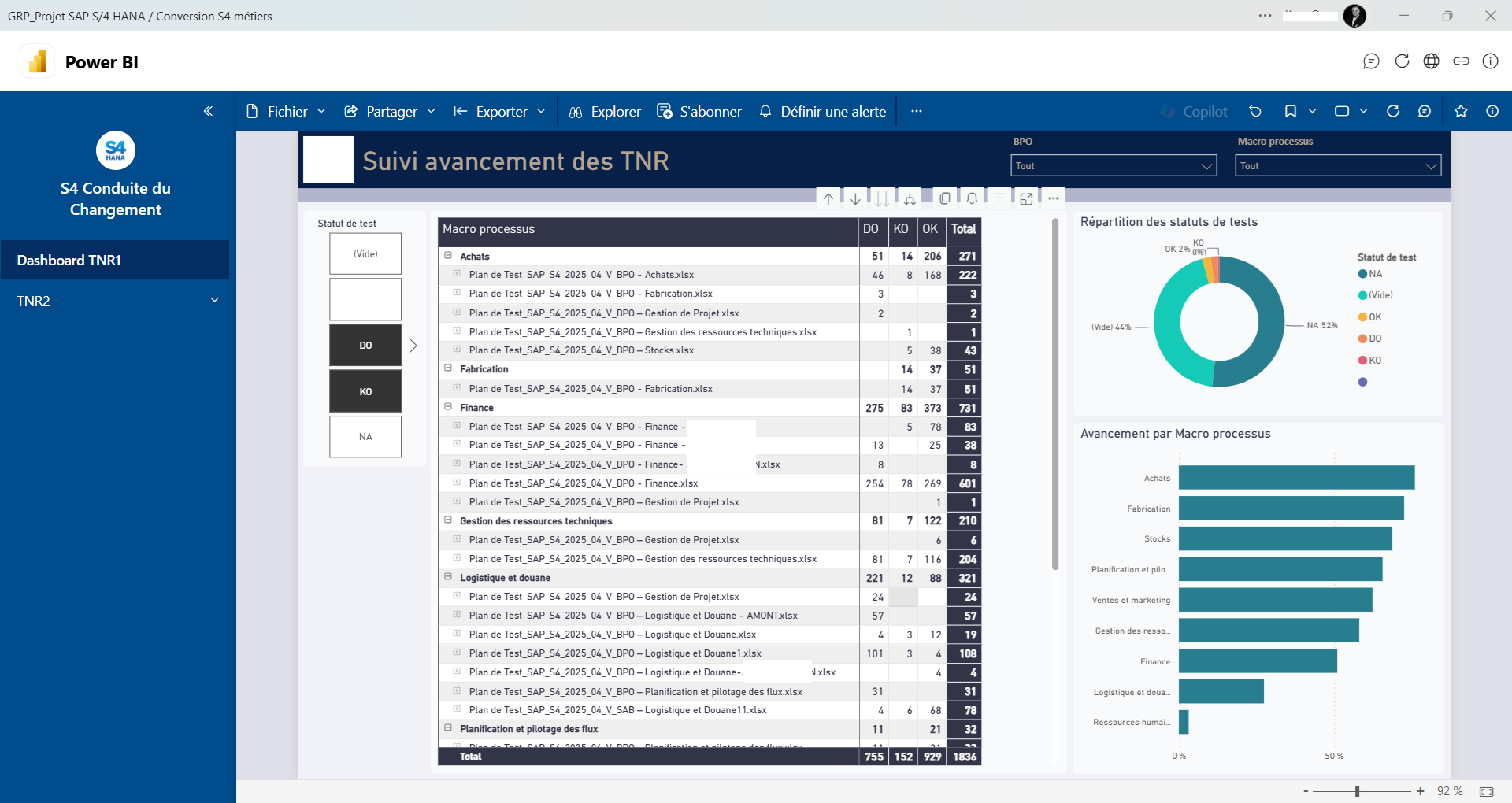
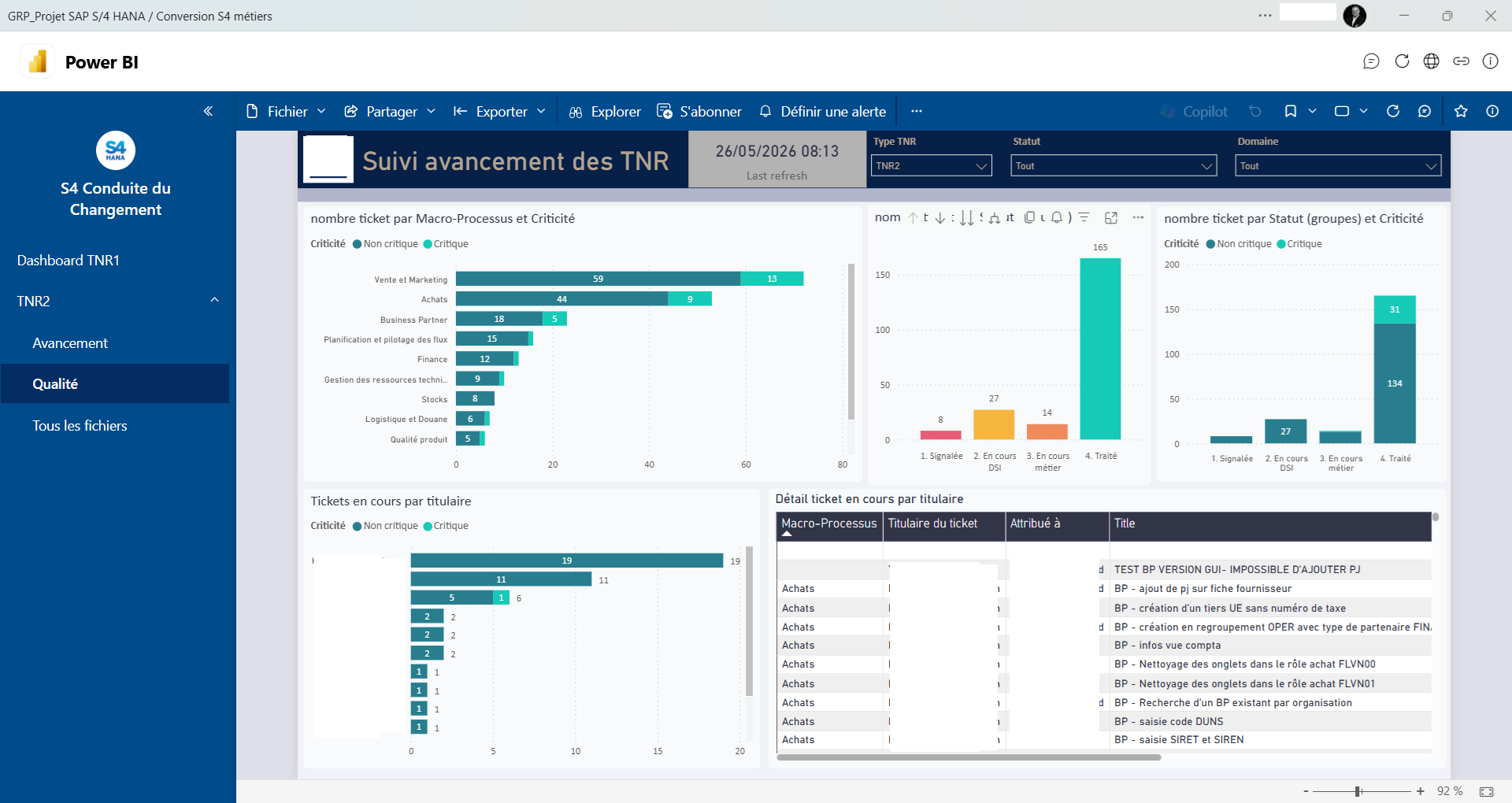
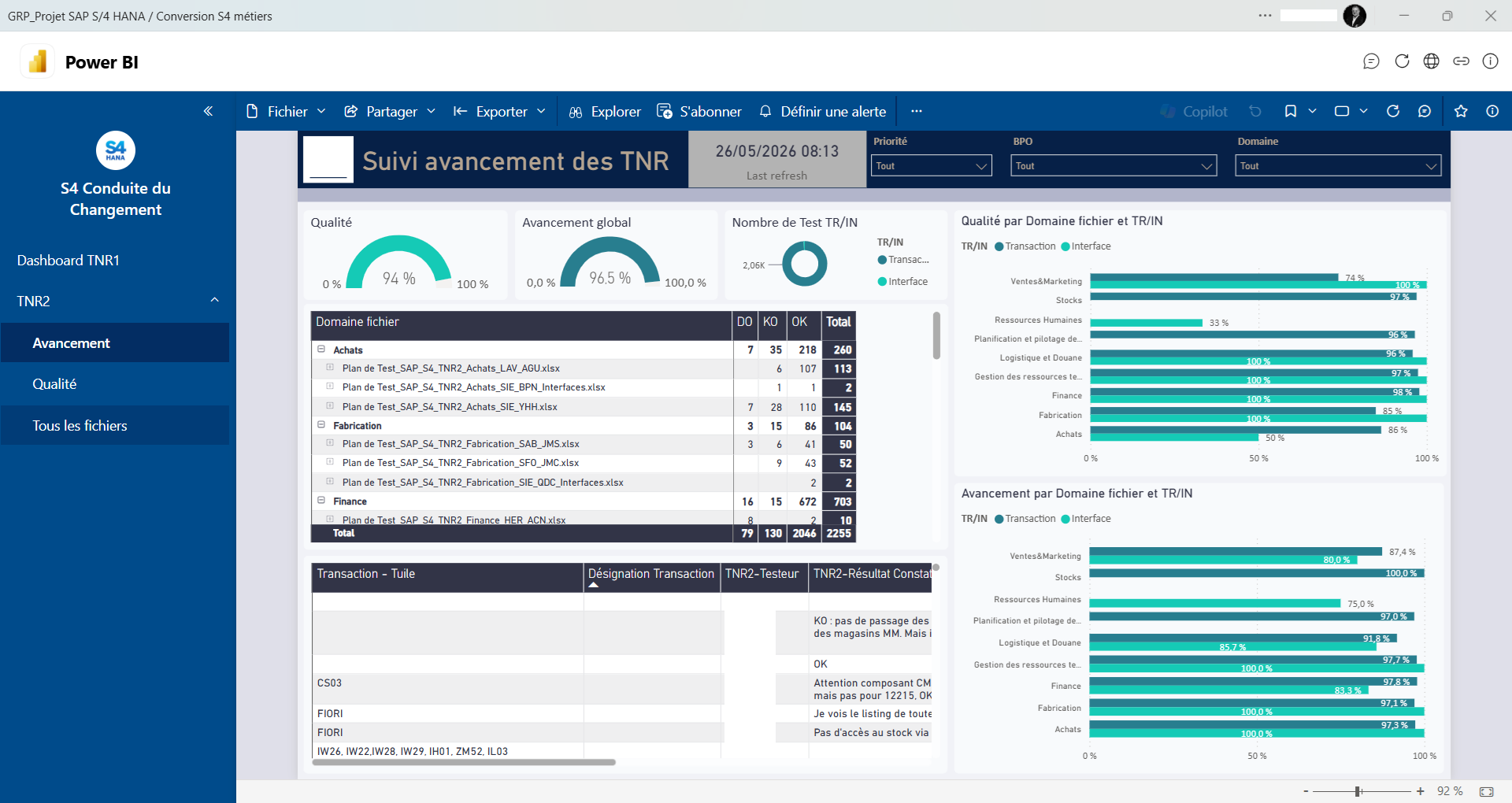
80 people contributed to the testing phase. I stepped in to structure the collaborative work: tracking test progress, ensuring tests were properly carried out, and managing issue resolution. Without specific governance in place, the risks are very real: some tests go unprepared, everyone tracks their own progress in isolation, and issues are handled informally directly with the IT lead. A nightmare.
The solution :
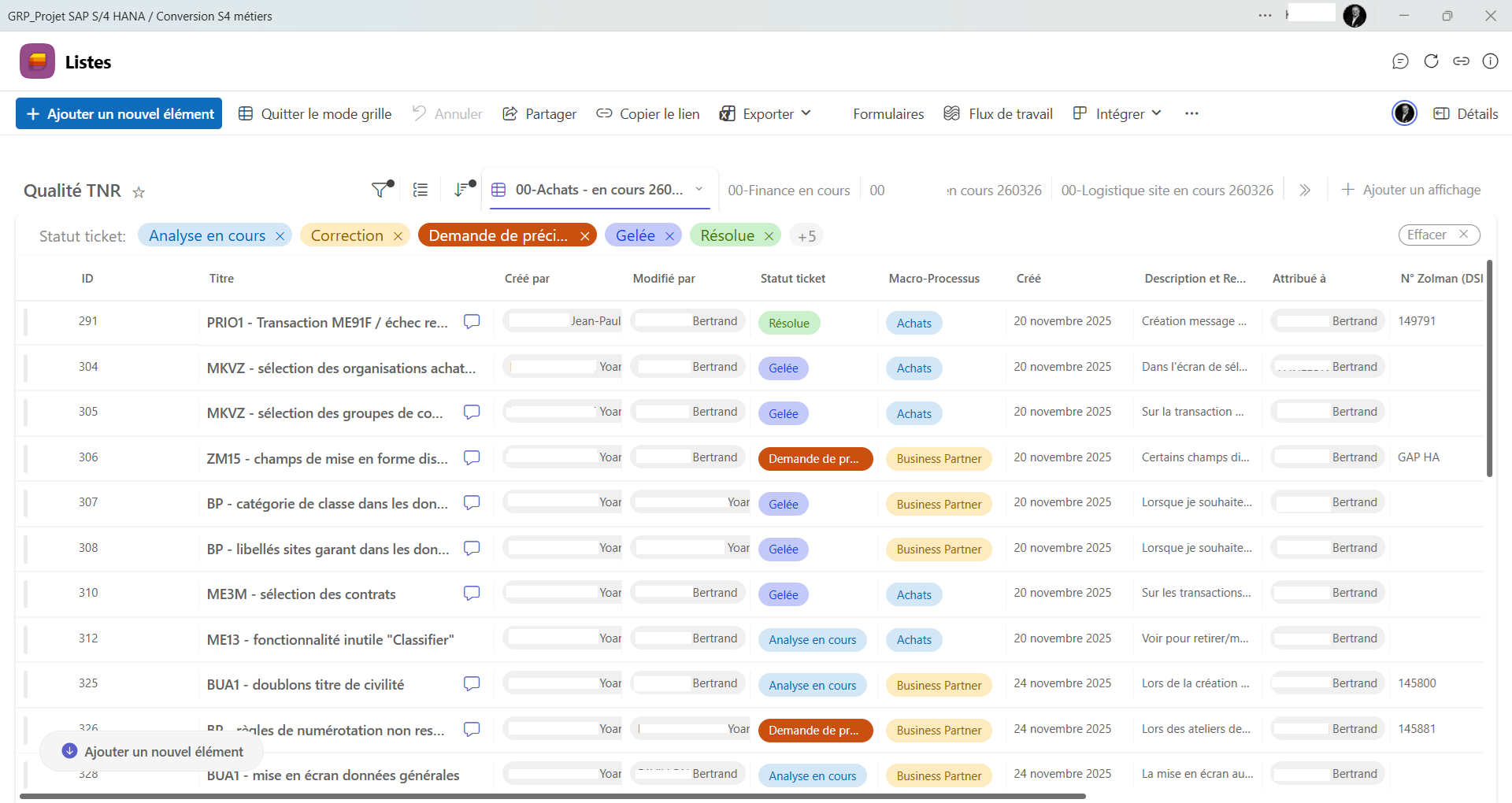
I designed and deployed a Power BI dashboard that :
I coordinated the S/4 HANA training plan end-to-end, from definition to execution, including the tendering process.
The first step was to build a training catalogue collaboratively. The 4 domain leads from the IT department defined 110 modules covering the entire company scope. From there, 41 business profiles were created by the same stakeholders, and for each of them, a tailored training path was designed.
We then assessed the number of people per profile and per site in order to calculate the number of learners per module and per location (Lyon, Fos-sur-Mer, Spain). Session caps were then set by format: 12 people per in-person session, 50 for webcast, and unlimited for e-learning and standard operating procedures.
A training plan combining format and number of sessions per module was defined, and a price assumption per format enabled an initial budget sizing. The assumptions were then revised to bring the overall training plan valuation in line with the budget.
I then drafted a specification document structured in 3 lots: 1. In-person and Webcast, 2. E-learning, 3. Spain.
Following the tendering process, vendors were selected, which led to a budget reassessment, primarily through format adjustments.
Training material production was managed according to a dedicated plan: workload assessment, module distribution among vendors, production tracking, prioritization and validation by business champions. A detailed execution plan was then established, specifying for each session the location, date, time and relevant module. HR finally took charge of training wish expression, registrations and operational logistics.